





Running a business fleet is not just about vehicles. It is about control, cost, safety, and performance.
Whether you manage five vans or five hundred trucks, fleet management determines how efficiently your company operates.
In this guide, you’ll learn what fleet management is and how to run it smarter. Let’s dive in.
Key takeaways
- Fleet management controls costs, safety, and performance across the entire vehicle lifecycle.
- Data and real-time tracking improve decisions and reduce operational risk.
- Preventive maintenance and fuel optimization lower expenses and increase uptime.
- VIN decoding improves data accuracy for smarter fleet decisions.
Fleet Management Explained
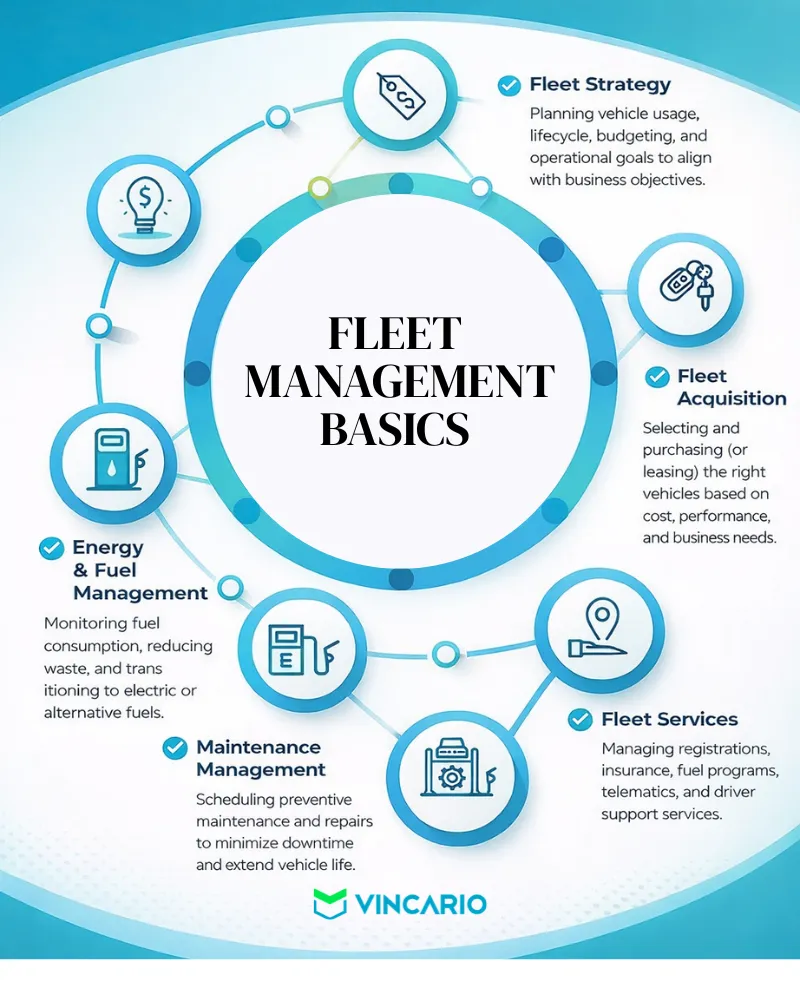
Fleet management is the process of strategically overseeing company vehicles to maximize performance while reducing operational risk and expenses. It combines:
- Vehicle acquisition
- Maintenance and servicing
- Fuel management
- Driver management
- Telematics and tracking
- Compliance and insurance
- Cost control and reporting
The goal is simple. Maximize uptime and minimize total cost of ownership.
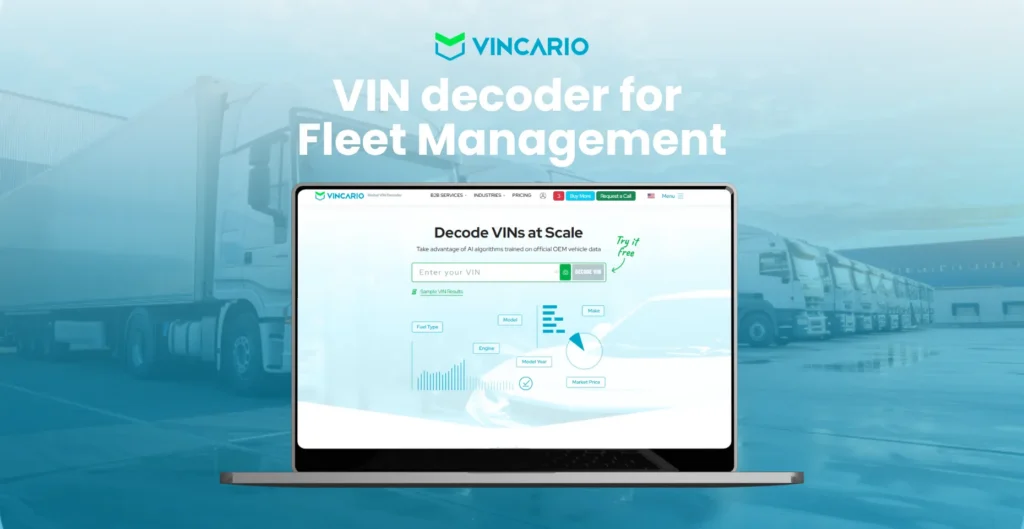
Modern fleet management is driven by data. With connected tools and a VIN decoder API, you can access 50+ vehicle data points, verify specifications instantly, and make faster, smarter decisions.
What is a fleet vehicle?
A fleet vehicle is any vehicle owned or leased by a business for operational purposes. This includes delivery vans, company cars, service trucks, construction equipment, utility vehicles, and heavy-duty transport trucks. If a vehicle supports daily business operations, it is considered part of the fleet.
Why Modern Fleet Management Matters
What is the real value of modern fleet management? Fleets are more complex than ever, and data is the difference between guesswork and smart decision-making.
Fleet data analytics can reduce overall operating costs by up to 25% in the first year by cutting waste, improving fuel efficiency, and preventing breakdowns. Real-time insights help managers identify inefficiencies, optimize routes, and improve safety and productivity.
Expert Opinion: “The most successful fleets treat vehicle data as a strategic asset, not just operational information.” — Martin Vlcko, CEO of Vincario
How does fleet management work
Fleet management works through structured processes supported by software and data. Here are the 5 key elements of how fleet management works:
1. Vehicle acquisition
Selecting the right vehicles based on business needs, expected mileage, fuel efficiency, payload requirements, and total lifecycle cost. Smart acquisition reduces long-term maintenance and operating expenses.
If you are looking for detailed information about your vehicle, use one of the free VIN decoders to quickly access its specifications, history, and key technical data.
2. Registration and compliance
Managing vehicle registration, inspections, insurance, taxes, and regulatory requirements. Staying compliant prevents fines, legal risks, and operational delays.
3. Monitoring and tracking
Using GPS and telematics systems to track vehicle location, route history, engine diagnostics, idle time, and driver behavior. This improves safety, accountability, and fuel efficiency.
4. Maintenance scheduling
Planning preventive maintenance based on mileage, engine hours, or manufacturer recommendations. Regular servicing reduces breakdowns, extends vehicle life, and protects resale value.
5. Cost analysis and reporting
Tracking fuel consumption, repairs, downtime, insurance, and depreciation. Clear reporting helps identify cost trends and areas for improvement.
Pro tip: Integrate your VIN decoder data with fleet software and telematics to standardize vehicle records from day one, improve maintenance accuracy, and make smarter replacement decisions based on real lifecycle costs.
How to improve fleet management
Improvement starts with visibility and structured processes. When you measure performance consistently, you can control costs and increase vehicle availability.
| Strategy | What It Means | Why It Matters |
| Use fleet management software | Replace spreadsheets with a centralized system. | Reduces errors and saves time. |
| Track data in real time | Monitor mileage, fuel, faults, and driver behavior. | Prevents costly surprises. |
| Use a VIN decoder API | Pull accurate vehicle specs and IDs from the VIN. | Improves vehicle records and helps you choose the right parts, service schedules, and replacements. |
| Preventive maintenance | Service vehicles before breakdowns occur. | Lowers repair costs and downtime. |
| Optimize routes | Plan efficient routes to reduce mileage. | Cuts fuel use and delays. |
| Standardize vehicles | Limit makes and models in your fleet. | Simplifies repairs and parts. |
| Analyze TCO | Look at full lifecycle costs, not just price. | Supports smarter buying decisions. |
Small improvements across multiple areas lead to major savings over time. Consistent monitoring and structured processes make fleet performance predictable and profitable.
Vincario Case Study
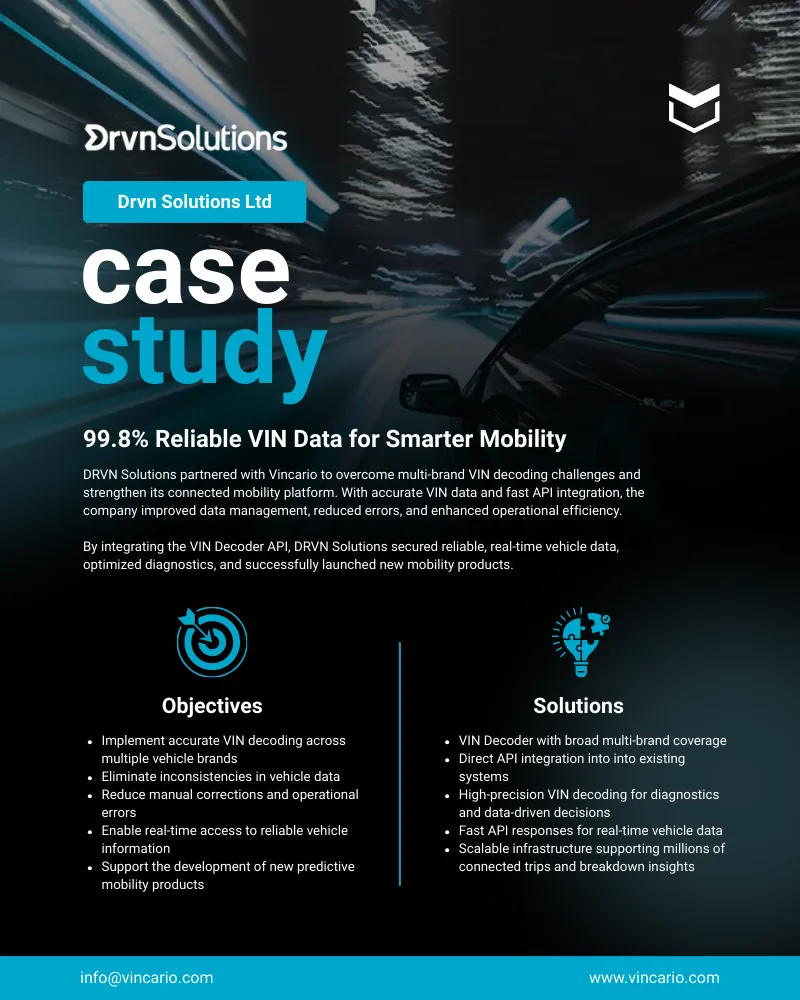
Drvn Solutions, a fleet and automotive data provider, integrated the Vincario VIN Decoder API into its products to enhance vehicle data accuracy and enrich user reports. By adopting Vincario’s machine-learning VIN decoding, Drvn Solutions was able to deliver precise specifications for vehicles across global markets, improving the quality of its own services.
This integration helped standardize vehicle information, reduce manual errors, and support smarter decision-making for fleet and automotive customers using Drvn Solutions’ platform — demonstrating how reliable VIN data can strengthen fleet operations and client satisfaction.
Want to learn more? See What Is Vincario platform?
How do you manage a fleet of vehicles?
Start with clear fleet policies that define vehicle usage, driver responsibilities, and safety standards. Use fleet management software and real-time tracking to monitor location, fuel consumption, mileage, and driver behavior.
According to industry data, fleets that use telematics and tracking tools report significant improvements in driver behavior and fuel savings, while also reducing safety incidents and costs.
Schedule preventive maintenance to reduce breakdowns and extend vehicle life. Track all operating costs, including fuel, repairs, insurance, and depreciation, to understand total cost of ownership.
Strong fleet management is built on data accuracy, accountability, and consistent processes. When these elements work together, performance improves and costs stay under control.
What does a fleet manager do?
A fleet manager ensures that every vehicle in the company supports performance, not problems. They balance cost control, operational efficiency, safety standards, and long-term planning to keep the fleet reliable and profitable.
- Selecting the right vehicles based on workload, fuel efficiency, lifecycle cost, and resale value
- Planning preventive maintenance to avoid breakdowns and reduce unexpected repair expenses
- Controlling fuel and operating costs through monitoring, reporting, and optimization
- Improving driver performance and safety with clear policies and behavior tracking
- Managing compliance requirements such as inspections, registrations, insurance, and documentation
- Using fleet data and telematics to identify inefficiencies and support smarter decisions
Tip: The best fleet managers are those who work with data, not assumptions. They track performance, analyze costs, and make decisions based on real insights.

Which industries use fleet management?
Fleet management is essential wherever vehicles support daily operations. If transportation impacts revenue, service quality, or safety, structured fleet management becomes critical.
- Logistics and Transportation
Delivery companies, freight carriers, and last-mile operators depend on fleet management to optimize routes, reduce fuel costs, and ensure on-time deliveries.
- Construction
Construction firms manage trucks, heavy equipment, and service vehicles. Fleet management helps prevent downtime, track assets across job sites, and control maintenance costs.
- Utilities and Field Services
Energy providers, telecom companies, and maintenance contractors use fleet systems to dispatch technicians efficiently and monitor vehicle usage.
- Retail and Distribution
Retail chains with distribution networks rely on fleet management to coordinate warehouse deliveries and maintain supply chain efficiency.
- Healthcare
Medical transport services and home care providers use fleet management to improve response times and ensure vehicle reliability.
- Corporate and Government Fleets
Companies and public agencies manage company cars, service vehicles, and municipal fleets to maintain compliance, safety, and budget control.
How fleet management helps construction companies?
Construction projects run on tight deadlines and heavy equipment. Fleet management keeps trucks and machinery available, safe, and cost-efficient.
It reduces downtime through preventive maintenance, tracks equipment across job sites, controls fuel use, and improves driver safety. The result is fewer delays, lower operating costs, and better project profitability.
How to manage fleet fuel costs?
Fuel is often the largest variable expense in fleet operations. In many fleets, it represents 20–30% of total operating costs. Without proper monitoring, small inefficiencies quickly turn into major losses.
Key Strategies to Control Fuel Costs
- Monitor fuel consumption per vehicle
Track liters or gallons per 100 km (or MPG). Identify underperforming vehicles early. - Reduce idling time
Excessive idling increases fuel use and engine wear. Even one hour of idling per day can waste hundreds of liters annually per vehicle. - Optimize routes
Shorter, well-planned routes reduce mileage and fuel consumption. - Use fuel cards
Track transactions, prevent fraud, and analyze purchasing patterns. - Monitor driver behavior
Harsh acceleration and speeding increase fuel usage by up to 20%. - Choose fuel-efficient vehicles
Consider total lifecycle cost, not just purchase price.
Example: Fleet Fuel Cost Structure (Per Vehicle / Month)
| Cost Factor | Example Value | Impact on Budget |
| Fuel consumption | 2,000 liters | Core expense driver |
| Average fuel price | €1.60 per liter | Market-dependent variable |
| Monthly fuel cost | €3,200 | Direct operating cost |
| Excess idle fuel (5%) | €160 | Preventable loss |
| Aggressive driving impact (10%) | €320 | Behavior-related cost |
| Potential savings (15% optimization) | €480 | Monthly savings opportunity |
Even a 10–15% improvement in fuel efficiency can translate into thousands in annual savings per vehicle.
What are the key benefits of fleet management?
As you’ve seen throughout this guide, fleet management is more than operations — it’s a competitive advantage. Here are the benefits that matter most.
- Lower operating costs
Reduce fuel waste, prevent expensive breakdowns, and control total cost of ownership. - Improved vehicle uptime
Preventive maintenance keeps vehicles on the road and minimizes downtime. - Better fuel efficiency
Route optimization and driver monitoring reduce unnecessary consumption. - Increased driver safety
Track behavior, reduce accidents, and improve compliance. - Stronger regulatory compliance
Stay on top of inspections, insurance, and legal requirements. - Data-driven decisions
Use real-time insights to optimize routes, replacement cycles, and budget planning. - Higher productivity
Efficient dispatching and tracking improve delivery times and service quality. - Improved asset visibility
Know where your vehicles and equipment are at all times.
Conclusion
Is your fleet performing at its full potential or costing you more than it should?
Every missed service, inefficient route, or incomplete vehicle record adds hidden costs to your operation. Take the next step toward smarter fleet management. Try Vincario VIN Decoder and schedule a demo with our expert team to see how better vehicle data can transform your fleet performance.
FAQ
How can Vincario VIN decoder help fleet management companies?
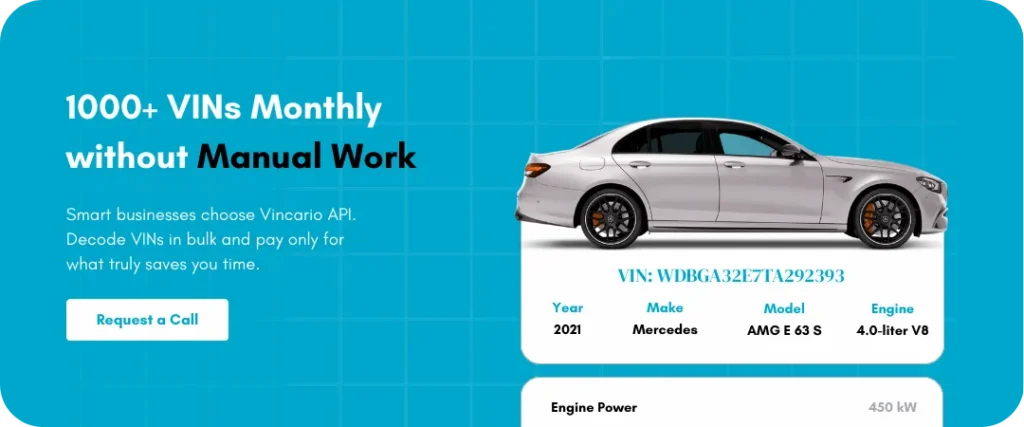
Vincario VIN decoder helps fleet management companies access accurate vehicle data instantly from the VIN. It provides detailed specifications, engine and equipment information, model verification, and other technical data needed for maintenance planning, parts matching, compliance checks, and vehicle acquisition decisions.
By standardizing vehicle records and reducing manual errors, it improves data accuracy and supports smarter fleet management.
What is a fleet?
A fleet is a group of vehicles owned or leased by a business for operational use. It can include cars, vans, trucks, or specialized equipment used for transport, delivery, field service, or construction.
What is a fleet manager?
A fleet manager is the person who turns vehicles into controlled, measurable business assets by aligning operations, costs, and performance.
What is fleet services?
Fleet services are professional solutions that support the management, maintenance, and operation of company vehicles, including leasing, maintenance, fuel management, telematics, and insurance.
What is fleet insurance?
Fleet insurance is a single insurance policy that covers multiple business vehicles under one contract, simplifying administration and often reducing overall insurance costs.
What is fleet maintenance?
Fleet maintenance is the regular servicing, inspection, and repair of company vehicles to keep them safe, reliable, and operational while reducing downtime and long-term costs.
What is fleet tracking?
Fleet tracking is the use of GPS and telematics technology to monitor vehicle location, movement, and performance in real time. It helps businesses improve safety, control fuel costs, and optimize routes.
Is it a good idea to buy a fleet vehicle?
Buying a fleet vehicle can be a smart investment if your business relies on long-term vehicle use and stable operations. Ownership gives you full control, no mileage limits, and the ability to resell the vehicle based on its market value.
However, you must consider total cost of ownership, including depreciation, maintenance, fuel, insurance, and the vehicle’s future resale value. If market value drops quickly or operational needs change, leasing may offer more flexibility and lower financial risk.
How to reduce fleet costs?
Reduce fleet costs with these quick steps:
- Track fuel usage and reduce idling time.
- Implement preventive maintenance to avoid expensive repairs.
- Monitor driver behavior to improve fuel efficiency and safety.
- Optimize routes to cut unnecessary mileage.
- Analyze total cost of ownership (TCO) before buying or replacing vehicles.
- Use fleet management software to centralize data and improve decision-making.
Small operational improvements can generate significant long-term savings.
When to replace fleet vehicles?
Most fleet vehicles are replaced between 3 to 5 years or after 120,000 to 200,000 km (75,000–125,000 miles), depending on usage and industry standards.
You should consider replacement when maintenance costs rise sharply, downtime increases, fuel efficiency declines, or the vehicle’s market value begins to drop faster than its operating value. Smart lifecycle analysis helps determine the optimal replacement point.
What is a fleet license plate?
A fleet license plate is a registration plate assigned to vehicles that are registered under a company fleet program, allowing businesses to manage multiple vehicles under one account. You can verify vehicle registration details using a license plate lookup service.