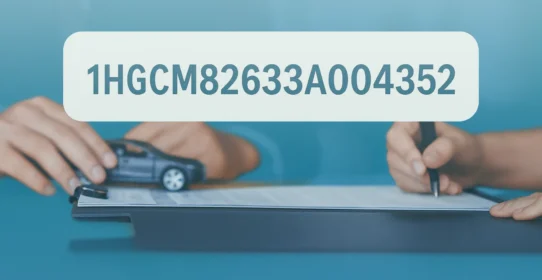






Every car carries a code that reveals its identity. That code is the VIN.
If you are new to cars, this guide is made for you. You will learn what a VIN number is, what it looks like, where to find it, and how to check it for FREE.
Let’s begin.
VIN Definition and Meaning
A VIN number, or Vehicle Identification Number, is a unique code used to identify a specific vehicle. It is assigned by the manufacturer when the car is built and remains the same for its entire life.
Practical example: When buying a car, sellers often share the VIN number. The VIN helps buyers check important vehicle details before contacting the seller.
By entering the VIN into a free VIN check tool, a buyer can confirm the car’s make, model, year, and recall status. This makes it easier to verify the listing and avoid mistakes before making a decision.
What Does a VIN Number Look Like?
If you are not sure whether a VIN number is correct, check its standard format first. Every VIN follows the same structure and is easy to identify.
A VIN is a combination of numbers and capital letters.
1HGCM82633A123456
Interesting fact: The letters I, O, and Q are never used. They are excluded because they can be confused with numbers, which helps prevent errors.
How Many Digits Is a VIN Number?
A VIN number always has the same length. It contains 17 characters, no more and no less. This format is used worldwide. It has been mandatory since 1981.
Tip: If you do not have the full VIN, Vincario can still decode it. Simply enter the known characters and replace the last digits with 0 to get basic vehicle information. Try it at no cost.
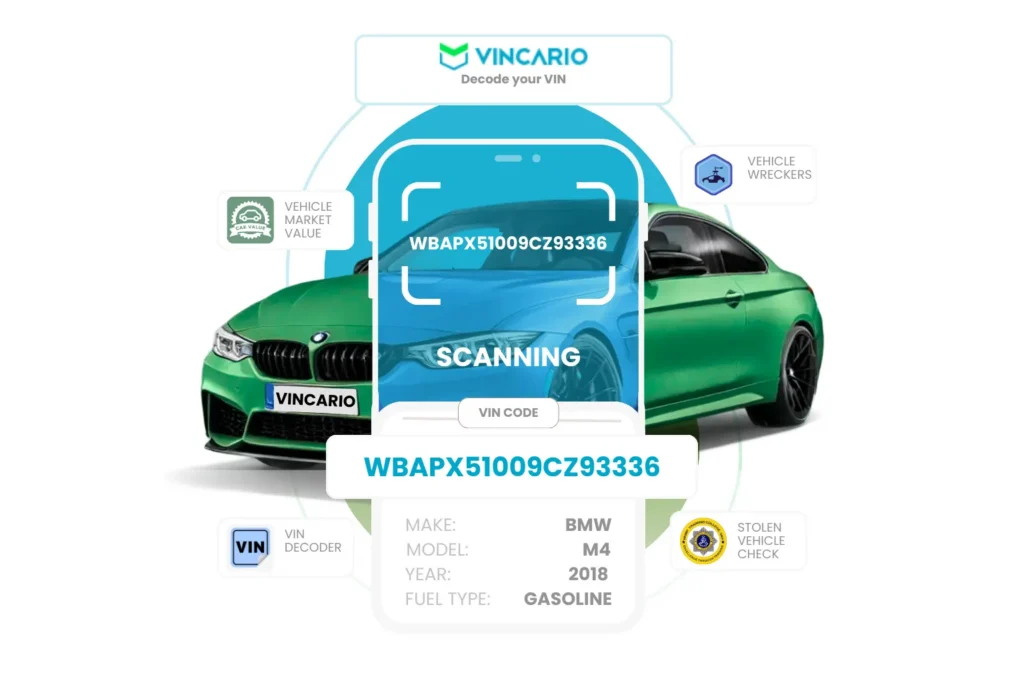
What does a VIN number tell you?
You might be asking, what can you get from a single VIN? A VIN provides a clear breakdown of a vehicle’s identity and key technical information, including:
- Make and manufacturer
- Model and variant
- Model year
- Vehicle type (e.g. truck, passenger car)
- Body style (e.g. pickup)
- Trim level
- Engine type and engine code
- Engine displacement and power
- Fuel type
- Transmission type and number of gears
- Drivetrain (e.g. 4×4, AWD, FWD)
- Emission standard
- Assembly plant and country of manufacture
- Production and registration dates
- Vehicle serial number
- VIN check digit validity
- Recall eligibility status
To see these details in one place, check a Vincario report for free.
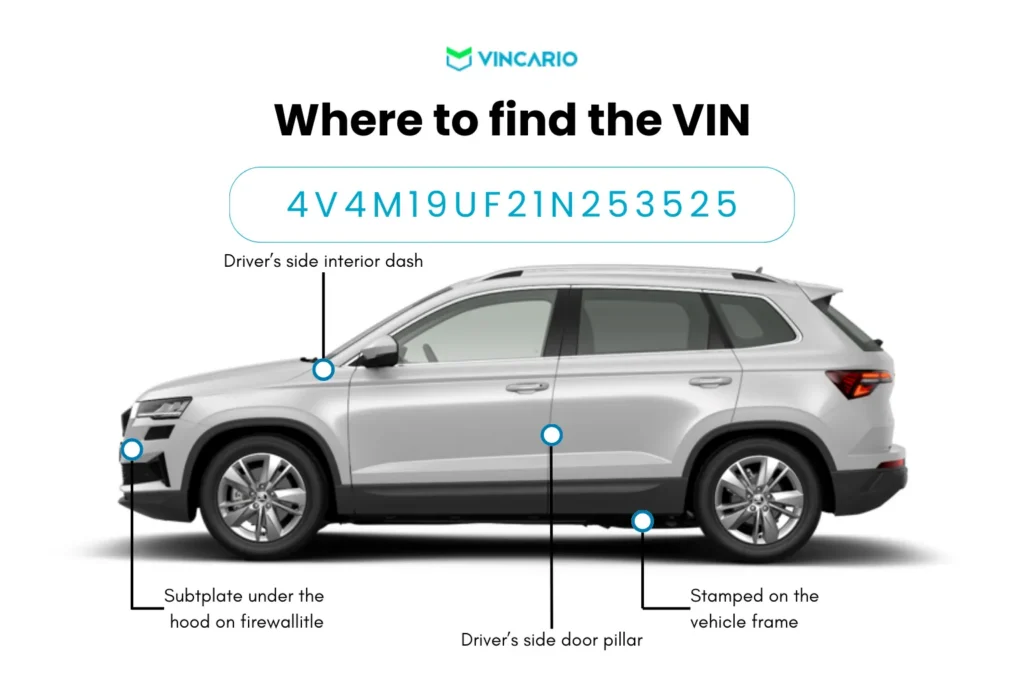
Where Is the VIN Number Located?
The VIN is placed where it can be found and verified. Manufacturers use multiple locations to prevent tampering.
On the car, you can usually find the VIN in these places:
- On the dashboard, near the windshield
- Inside the driver-side door jamb
- In the engine bay, on the firewall
- Stamped on the vehicle frame
Where to Find VIN Number on Car Documents?
The VIN also appears on official documents, including:
- Vehicle registration
- Insurance card
- Title document
- Service records
Always compare the VIN in all locations. Every VIN must match exactly.
Tip: Vincario provides VIN decoding for many vehicle types and helps identify where the VIN number is located on each vehicle. It supports cars, motorcycles, quads and ATVs, trailers, RVs and motorhomes, trucks, buses, and tractors.
How to Read a VIN Number?
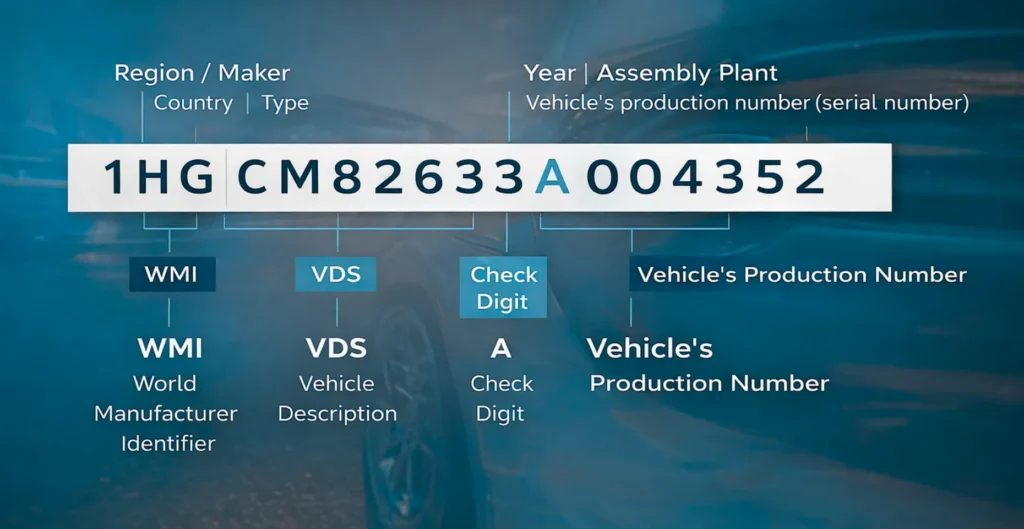
At first glance, a VIN may look random. In reality, every character has a clear meaning. A VIN is divided into three main sections, each revealing specific vehicle information.
1. World Manufacturer Identifier (1–3 characters)
This shows who built the car. It also shows the country or region.
Example:
- 1, 4, 5 = United States
- J = Japan
- W = Germany
2. Vehicle Descriptor Section (4–9 characters)
This part describes the vehicle itself, including body type, engine, and safety features.
The 9th character is especially important. It is the check digit, used to verify that the VIN is valid and has not been altered.
3. Vehicle Identifier Section (10–17 characters)
This part is unique to each vehicle. It shows the model year, the manufacturing plant, and the vehicle’s serial number.
If you work with hundreds of VINs every day, a reliable and accurate VIN decoder API is essential for accessing detailed, up-to-date vehicle information.
How to Decode a VIN Number?
Decoding a VIN number means translating its characters into real vehicle data. You can decode a VIN manually, but most people use online tools for speed and accuracy.
A VIN decoder can reveal key details such as the manufacturer, model, engine type, model year, and assembly plant. These details should always match the actual vehicle. If they do not, it may indicate an error, modification, or fraud.
There are many free VIN decoders available online. Below are three popular and widely used tools.
| VIN Decoder | Free Features | Key Benefits |
| Vincario | VIN decoding, vehicle specs, VIN location, partial VIN support | Decodes cars, motorcycles, trucks, RVs, trailers, supports incomplete VINs |
| AutoZone | Basic VIN decoding, engine and parts compatibility | Useful for identifying correct replacement parts |
| autoDNA | Basic VIN decoding, limited vehicle data | Strong focus on vehicle history reports in Europe |
Vincario provides advanced VIN decoding with support for multiple vehicle types, partial VINs, VIN location search, vehicle market value, stolen and wrecker checks, and license plate lookup.
TIP: For quicker lookups, many car owners and dealerships now use the best VIN scanner apps that scan the VIN barcode and instantly provide vehicle details, history records, and technical specifications.
Why the VIN Matters
The VIN is the backbone of vehicle trust. It helps confirm identity, detect stolen vehicles, and support recalls and safety actions.
For beginners, it brings confidence to car buying, and for professionals, VIN decoder APIs power fast, accurate decisions across industries like automotive sales, insurance, fleet management, and mobility services.
We hope this guide helped you find the answers you need and get the most from your VIN.
Frequently Asked Questions
1. How to Check VIN Number for Free?
You can check a VIN number for free using online VIN decoder tools. Many services provide basic vehicle details at no cost, but the accuracy and depth of information depend on the quality of their data sources. For reliable results, use well-known and trusted VIN check platforms.
2. How to Look Up VIN Number?
Looking up a VIN number depends on what you need. Buyers often use it to check vehicle history, while owners use it to verify technical details. A VIN lookup helps confirm specifications, check recalls, and detect possible fraud—always use trusted databases and avoid unknown websites.
3. How to tell if a VIN is stolen?
You can tell if a VIN is stolen by checking it against trusted vehicle databases. A VIN check can reveal theft records, mismatched details, or irregular registration history. If you suspect a vehicle is stolen, you can report it directly using the Vincario theft report form.
4. How to Find License Plate Number With VIN?
In some countries or regions, it is possible to find a license plate number using a VIN, but this service is not available globally. Access is often restricted due to privacy and security laws and is usually limited to authorities, insurers, or authorized providers. If a tool claims worldwide access, use caution and verify its legitimacy.
5. Is It Safe to Share VIN Number?
Yes, sharing a VIN number is generally safe, as it is not confidential and is often visible on the vehicle itself. Just avoid sharing personal documents or sensitive information along with the VIN.
6. Is It Safe to Give VIN Number on Facebook Marketplace
Yes, it is usually safe to share a VIN number on Facebook Marketplace, as buyers often need it to verify vehicle details. Do not share personal documents or private information with it.
7. Is Title Number Same as VIN?
No, a title number is not the same as a VIN.
A VIN identifies the vehicle itself, while a title number identifies the ownership document. The VIN stays with the car for its entire life.
The title number can change when ownership or jurisdiction changes.
8. Is a VIN number the same as a chassis number?
A VIN number and a chassis number are often used to mean the same thing, but they are not always identical.
In modern vehicles, the VIN usually replaces the traditional chassis number.
On older vehicles, the chassis number may be shorter and follow a different format. Today, the VIN serves as the official vehicle identifier in most countries.
9. Can I decode a VIN without a chart?
Yes, you can decode a VIN without a chart by using an online VIN decoder tool. These tools automatically translate the VIN into vehicle details without manual reference.
10. What characters are never in a VIN?
The following characters are never used in a VIN to avoid confusion:
- I – can be mistaken for the number 1
- O – can be mistaken for the number 0
- Q – can be mistaken for 0 or O
All other letters used in a VIN are capital letters, combined with numbers.
11. Why is my VIN only 13 digits?
Your VIN is likely 13 digits because the vehicle was manufactured before 1981, when VIN lengths were not standardized. Older vehicles often used shorter VIN formats, while modern vehicles always use 17 characters.
12. What does the 4th digit of a VIN mean?
The 4th digit of a VIN is part of the Vehicle Descriptor Section and usually indicates the vehicle’s model, body style, or engine type, depending on the manufacturer.
13. What does VIN 3 8th digit mean?
The 3rd digit of a VIN identifies the vehicle manufacturer or division.
The 8th digit usually describes the engine type or key performance characteristics, depending on the manufacturer.
14. How to tell a fake VIN?
You can spot a fake VIN by checking its format, consistency, and whether the decoded details match the actual vehicle.
Watch for these common warning signs:
- VIN is not 17 characters on modern vehicles (post-1981)
- Letters I, O, or Q appear in the VIN
- VIN on the dashboard does not match door jamb or documents
- VIN plate looks tampered, scratched, or reattached
- Check digit fails VIN validation
- Decoded details do not match the vehicle (engine, year, model)
- Seller refuses to share the VIN or rushes the sale