




Accurate vehicle data is no longer a nice extra.
It powers listings. Parts searches. Insurance quotes. Fleet onboarding. Vehicle valuations. Even fraud checks.
But which automotive OEM software should you choose?
A free VIN decoder may be enough for a small internal project. A global marketplace needs something different. It needs reliable coverage, structured outputs, stable APIs and support when something breaks.
In this article, we compare six leading OEM software tools available in 2026. We looked at data depth, geographic coverage, integration options, pricing and real business value.
Here are our top picks:
| OEM software | Best for | Main strength |
|---|---|---|
| Vincario | Global automotive businesses | VIN decoding, OEM lookup, market value, stolen checks and OCR in one platform |
| DataOne Software | US and Canadian vehicle-data users | Exact trims, factory options and installed equipment |
| Sweent | White-label VIN solutions | Branded VIN decoding with OEM and engineered data |
| TecDoc Catalogue | Parts distributors and workshops | Parts fitment, OE references and cross-matching |
| Vehicle Databases | Developers using multiple APIs | Vehicle data, history, valuation, maintenance and OCR services |
| JATO Dynamics | Automakers and product planners | Global specifications, pricing and competitor intelligence |
Tip: Combine VIN decoding with OEM data. Use the VIN decoder for standard lookups and OEM data only when exact factory details are needed. This improves accuracy and reduces costs.
What Is OEM Software?
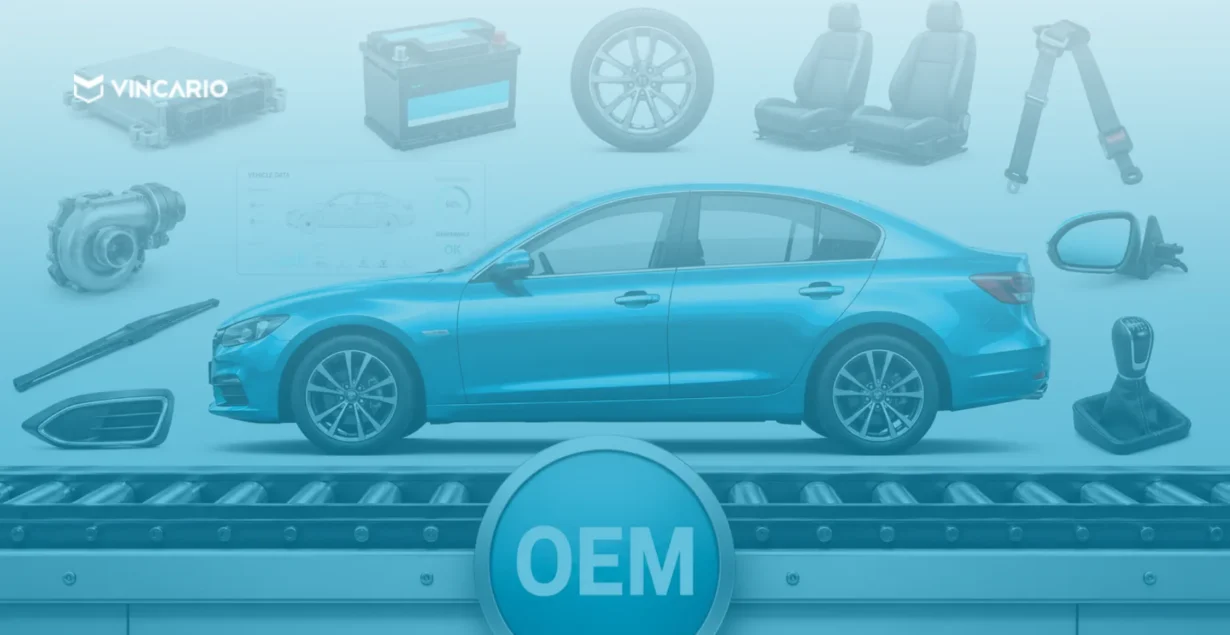
OEM stands for Original Equipment Manufacturer.
In general, OEM software is created by one company and licensed for use inside another product or service.
In the automotive industry, OEM software usually refers to tools that provide manufacturer-level vehicle data. This may include specifications, engine details, factory equipment, production information and parts references.
Its main purpose is simple: to identify exactly what a vehicle is.
The best decoder tools can use a VIN, registration number, model code or OE part number. They then return structured data for dealer systems, marketplaces, fleet platforms and other applications.

OEM software example
A dealership receives a used car. Instead of entering the make, model, engine and equipment manually, an employee scans the VIN.
The OEM lookup identifies the exact vehicle and sends its specifications to the inventory system.
Faster data entry. Fewer errors. Better listings.
Why Should You Use OEM Software?
Manual vehicle identification looks inexpensive—until mistakes appear.
A wrong trim can produce an inaccurate valuation. A wrong engine code can lead to an incorrect part. A missing option can reduce the advertised value of a vehicle.
Professional OEM software tools help automotive businesses:
- Reduce manual data entry. Vehicle details can be filled automatically from a VIN.
- Improve data accuracy. Standardised outputs prevent spelling mistakes and inconsistent model names.
- Identify exact configurations. Advanced tools can detect trim, engine, transmission, colours and factory equipment.
- Reduce incorrect parts orders. VIN-based fitment improves vehicle-to-part matching.
- Create listings faster. Dealers and marketplaces can publish complete inventory with less manual work.
- Improve vehicle pricing. Market data can connect a specific vehicle with current and historical listings.
- Automate workflows. An API can connect OEM data with a DMS, CRM, ERP, mobile app or internal OEM system.
- Scale internationally. Global coverage allows one product to process vehicles from different markets.
- Support compliance and risk checks. Some platforms add stolen vehicle, recall, title or history data.
The result? Your team spends less time researching vehicles. It spends more time selling, servicing and managing them.
Top 6 Online OEM Software Tools in 2026
OEM tools serve different needs, from vehicle specifications and parts data to pricing and history.
Our ranking compares their overall value for automotive businesses.
1. Vincario
Best overall OEM software for global automotive businesses.
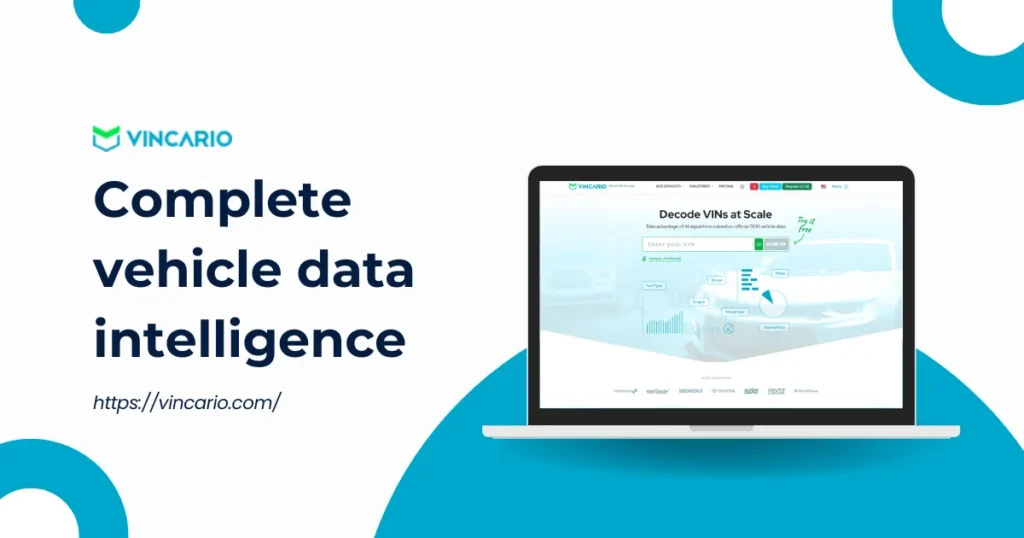
Vincario takes first place because it combines global VIN decoding with deeper OEM lookup capabilities and additional business services.
The platform can support vehicle onboarding, inventory management, fleet operations, automotive marketplaces, insurance workflows, parts identification and telematics.
Its API documentation currently includes separate endpoints for VIN decoding, OEM VIN Lookup, vehicle market value and stolen vehicle checks. The platform also offers VIN OCR and licence plate lookup tools.
OEM Data Outputs
Vincario provides vehicle details such as make, model, trim, engine, transmission, body style, dimensions and manufacturing data.
Its OEM VIN Lookup can identify exact equipment and factory configuration. The API can also add market value, stolen vehicle, licence plate and history data.
Best Features
1. Global coverage: Reliable data for European and international automotive businesses.
2. Detailed OEM lookup: Identifies exact factory equipment, variants and configurations.
3. All-in-one platform: Combines VIN decoding, valuations, stolen checks, OCR and other vehicle services.
4. Easy integration: The REST API connects with DMS, CRM, fleet and marketplace systems.
5. Flexible pricing: VIN decoding costs from €0.49 to €0.22 per successful lookup. OEM data uses custom pricing.
Vincario Reviews
Attila E. K.: “We are having great experience with Vincario so far. Their coverage of car makes and models are pretty perfect. When we have any little problem or question about their service, the support team is always there to help us. 10/10, thanks.”
2. DataOne Software
Best for detailed US and Canadian OEM build data.
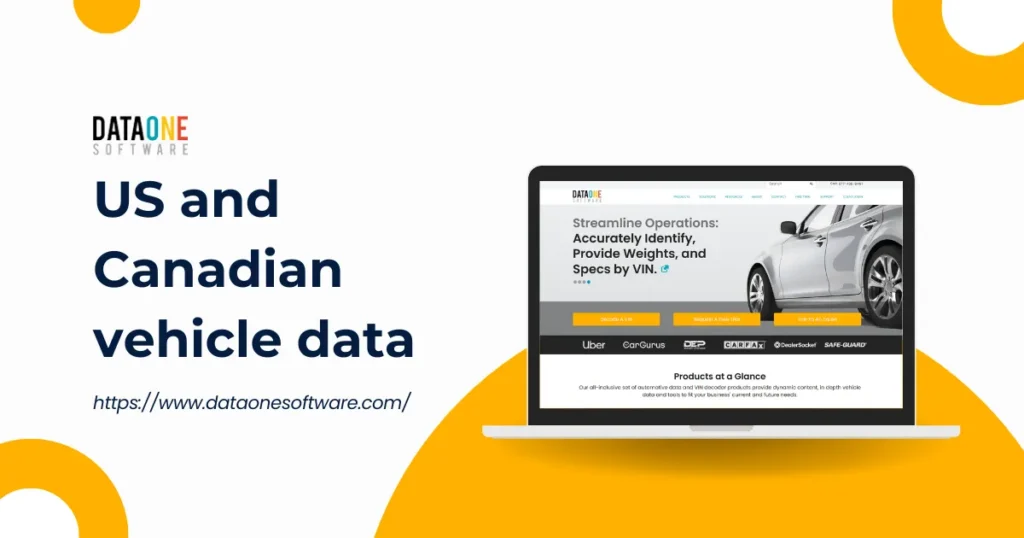
DataOne Software provides VIN decoding and automotive data for the US and Canadian markets. Its advanced solutions combine OEM Build Data with independently verified records to identify exact vehicle configurations.
OEM Data Outputs
DataOne provides details such as make, model, trim, engine, transmission, technical specifications, colours, MSRP, warranties and equipment.
Its enhanced VIN data can also identify factory-installed options, packages and the precise vehicle configuration.
Best Features
1. Exact vehicle identification: Detects installed equipment, colours, packages and options using the complete 17-digit VIN.
2. Strong North American coverage: Built specifically for vehicles sold in the US and Canada.
3. Flexible integration: The REST API supports JSON and XML. Database file delivery is also available.
4. Extensive automotive data: Includes specifications, service information, vehicle images and third-party data mappings.
5. Free trial and custom pricing: Businesses can test 50 VIN decodes for 15 days. Production pricing is customised by data requirements and usage volume.
DataOne Software Reviews
Jorge Valdivia, CTO of Fleetio: “DataOne’s dev docs are fantastic, and their API was very easy to understand and work with.”
3. Sweent
Best for white-label and government-ready OEM VIN solutions.
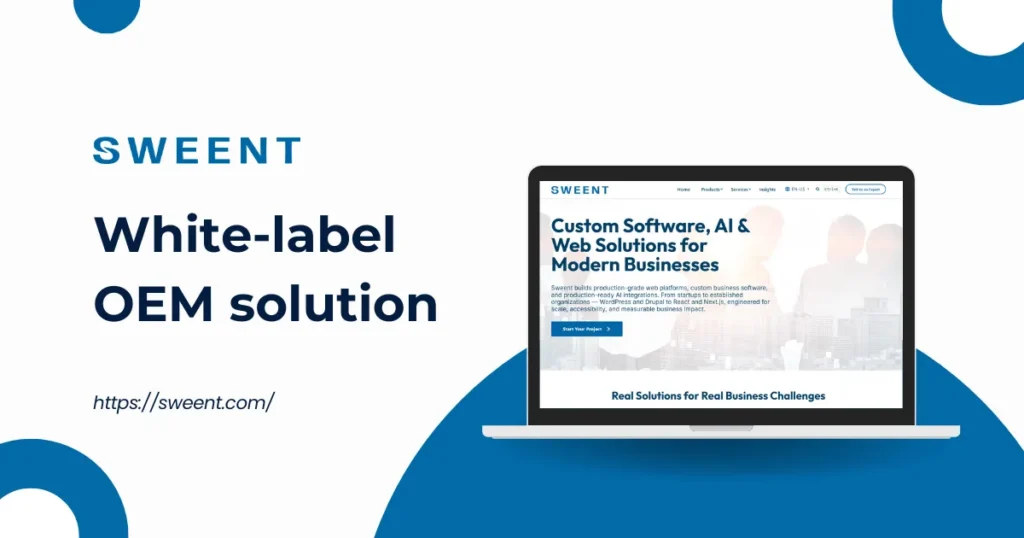
Sweent offers a VIN Decoder SaaS platform for businesses that want direct API access or a fully branded white-label solution.
The platform provides build-level vehicle data through partners with direct OEM licensing relationships. Supported manufacturers include Ford, GM, Hyundai, Nissan, Stellantis and Subaru. When OEM information is unavailable, Sweent supplements the response with engineered data and identifies the source of each field.
OEM Data Outputs
Sweent provides data such as make, model, year, body style, engine, transmission, fuel type, drivetrain, safety equipment, dimensions and weight.
Commercial vehicle outputs can also include GVWR, payload, axle configuration, trailer compatibility and fleet classification. Each field includes source attribution showing whether the information comes from OEM build data or an engineered source.
Best Features
1. White-label platform: Businesses can launch a dedicated VIN decoder under their own branding.
2. OEM-level information: Uses build data supplied through partners with direct manufacturer licensing relationships.
3. Flexible API access: A RESTful API returns structured vehicle information for integration into existing software.
4. Enterprise performance: Sweent states an average API response time of 500 milliseconds and a 99.9% uptime SLA.
5. Flexible deployment: Available as multi-tenant SaaS, a dedicated single-tenant environment or through AWS GovCloud infrastructure for government requirements.
Sweent offers API usage and white-label licensing models, but it does not publish fixed VIN decoding prices on its product page. Businesses must request a custom quote.
Sweent Reviews
Public customer reviews for Sweent are currently not available.
4. TecDoc Catalogue by TecAlliance
Best OEM parts catalogue software.
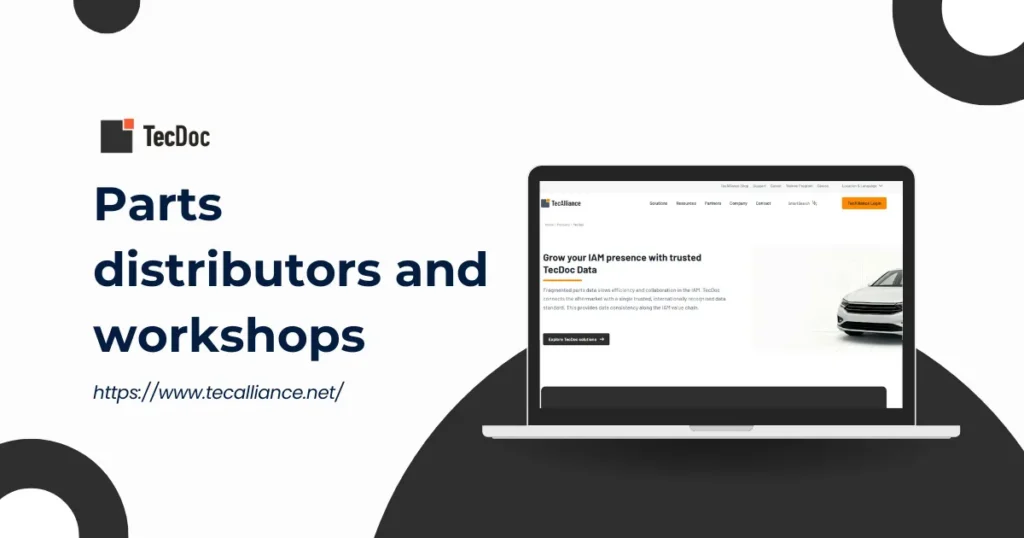
TecDoc Catalogue is designed for parts manufacturers, distributors, workshops and automotive e-commerce platforms.
Unlike OEM build-data tools, it focuses on connecting vehicles with compatible parts. Users can search by vehicle details, VIN, registration number, part number or OE number.
OEM Data Outputs
TecDoc provides standardised vehicle, product and fitment data. This includes article numbers, OE references, technical specifications, images, product documents and vehicle-to-part connections.
The platform covers more than 1,200 brands, 12.8 million articles, 260,000 vehicle types and 724 million vehicle linkages.
Best Features
1. Accurate parts matching: Finds compatible parts using a VIN, registration number, vehicle details, part number or OE reference.
2. Extensive data coverage: Connects millions of automotive articles with passenger cars, commercial vehicles and other vehicle types.
3. Flexible integration: Available through the online catalogue, mobile app, Web Service API, white-label solutions and downloadable data packages.
4. Standardised data: Product information supplied by parts manufacturers is validated and linked with TecDoc vehicle reference data.
5. Modular services: Businesses can add repair and maintenance data, OE parts information, vehicle-in-operation data and other specialised modules. Pricing depends on the selected package, region and integration.
Reviews
Public customer reviews for TecDoc are currently not available.
5. Vehicle Databases
Best for businesses that need many specialised automotive APIs.
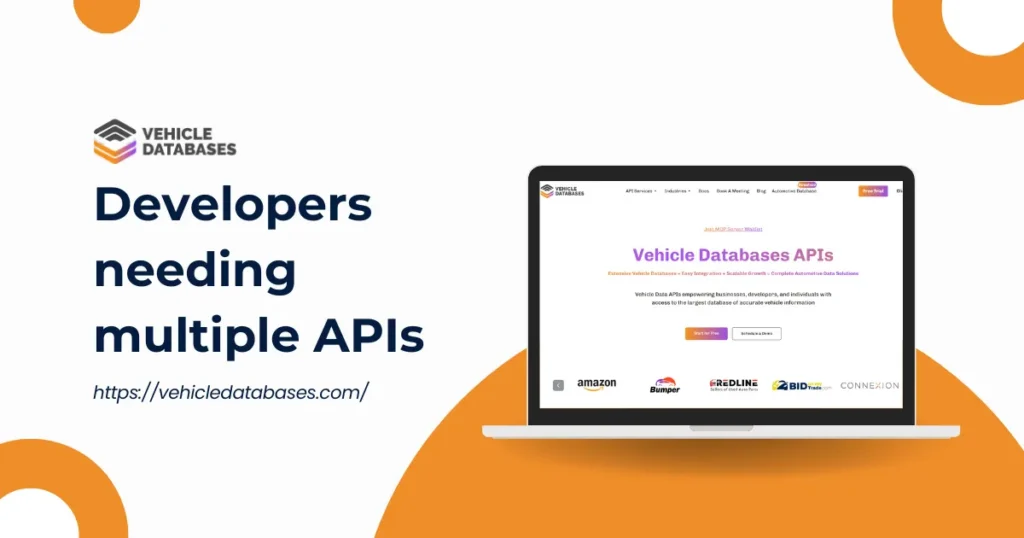
Vehicle Databases offers a broad range of vehicle data APIs for dealerships, marketplaces, insurers, repair platforms and automotive software developers.
Its services cover modern and classic vehicles, with tools for VIN decoding, specifications, valuations, history, auctions, maintenance, warranties and vehicle images.
OEM Data Outputs
Vehicle Databases provides details such as make, model, year, trim, engine, transmission, drivetrain, fuel type, dimensions, equipment and manufacturer information.
Businesses can add OEM specifications, factory maintenance schedules, window stickers, market values, recalls, vehicle history and sales records through separate APIs.
Best Features
1. Broad API portfolio: Offers more than 30 automotive APIs for vehicle identification, history, pricing, repairs and ownership workflows.
2. Modern and classic vehicle support: Standard VIN decoding covers vehicles from model year 1981 onward, while a separate API supports pre-1981 classic VINs.
3. International coverage: Provides dedicated VIN decoding for North American and European vehicles.
4. Flexible integration: REST APIs return structured data for websites, mobile applications and internal automotive systems.
5. Free testing: New users can receive free credits and an API key to test selected services. Paid access depends on the APIs and usage plan selected.
Reviews
Pinabel: “The pricing was competitive and the overall experience was positive…pleased with team support.”
6. JATO Dynamics
Best for global OEM product planning.
JATO provides automotive data and market intelligence for manufacturers, suppliers and other industry professionals.
Its solutions help OEM teams analyse vehicle specifications, pricing, market positioning and sales performance. JATO operates across more than 50 markets and standardises data to make vehicles easier to compare across brands and countries.
OEM Data Outputs
JATO provides vehicle specifications, prices, options, equipment, dimensions, powertrain details and configuration rules.
Its analysis tools can add registration volumes, market share, incentives, finance offers, model performance and competitor positioning. Vehicle Viewer gives teams access to specifications, pricing intelligence and option-package data through a cloud-based platform.
Best Features
1. Global market coverage: Provides standardised automotive information across more than 50 markets.
2. Competitor benchmarking: Helps OEMs compare vehicle specifications, options, prices and market positioning.
3. Product-planning intelligence: Supports decisions about model launches, equipment strategies, pricing and market opportunities.
4. Flexible data access: Information is available through cloud platforms and modular, real-time APIs with unified vehicle identifiers.
5. Market analysis and advisory: Combines automotive data with expert research and customised consulting services.
JATO does not publish standard pricing for its OEM solutions. Businesses must contact the company for a package based on their markets, products and data requirements.
Reviews
Public customer reviews for JATO are currently not available.
How Does OEM Software Work?
Automotive OEM software connects an identifier with one or more vehicle databases.
The identifier is usually a VIN. It can also be a registration number, manufacturer model code, OE part number or manual year-make-model selection. Here is the basic process.
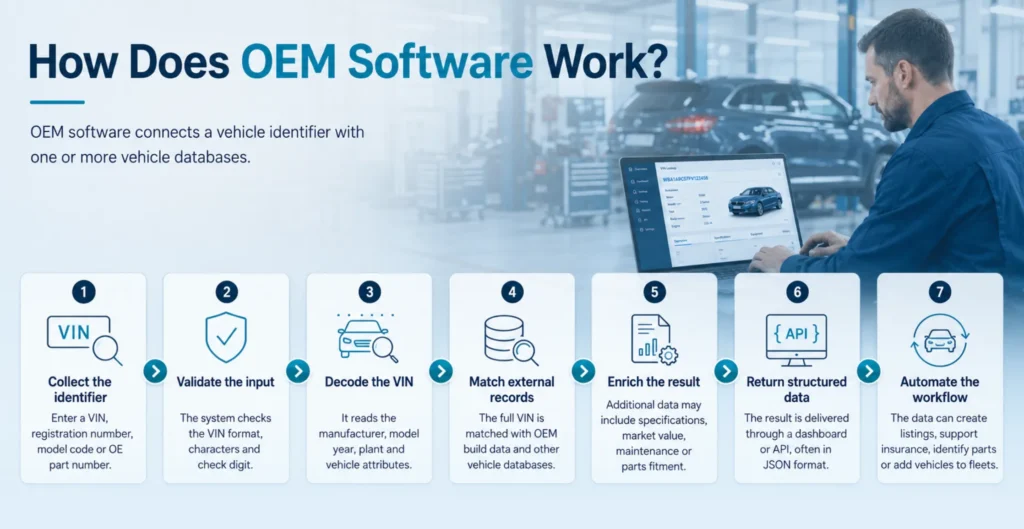
1. Collect the vehicle identifier
The user enters a VIN. A mobile application may also scan it from the dashboard, door frame or vehicle document.
2. Validate the input
The software checks the VIN length, permitted characters, manufacturer identifier and check digit where applicable.
This catches simple typing errors.
3. Decode the VIN structure
The system reads the manufacturer, vehicle attributes, model year, production plant and serial number encoded in the VIN.
4. Match external records
Advanced OEM software does not rely only on the visible VIN pattern.
It matches the complete VIN with OEM build data, verified vehicle records, catalogues and other databases. This is how it can identify details such as exact trim, colour or installed equipment.
5. Enrich the result
The provider may add specifications that are not directly encoded in the VIN.
Examples include dimensions, emissions, market value, maintenance information, parts fitment or theft status.
6. Return structured data
The result is delivered through an online dashboard or API.
Most modern OEM software integration projects use JSON. The customer’s application then maps the output into its own fields.
7. Automate the business workflow
The final data can create a dealer listing, calculate an insurance quote, identify a spare part or add a vehicle to a fleet.
The lookup takes seconds.
The value continues through the entire workflow.
What Is the Average Price for OEM Services?
There is no single average price. Why? Because a basic VIN decode and a complete OEM build lookup are different products.
Current public pricing examples show how wide the market is:
| OEM Software | VIN Decoding Pricing | OEM Data Pricing | Free Trial |
|---|
| Vincario | €0.49–€0.22 per lookup | €1.49–€1.99 per lookup | 20 free lookups |
| DataOne Software | Custom pricing | Custom pricing | 15 days or 50 VINs |
| Sweent | Custom pricing | Custom pricing | Not publicly listed |
| TecDoc Catalogue | Custom pricing | Custom pricing | 14 days |
| Vehicle Databases | €0.17–€0.25 per lookup | Custom pricing | 15 free credits |
| JATO Dynamics | Custom pricing | Custom pricing | Trial on request |
David Facko: “The cheapest OEM software is not always the best choice. Reliable vehicle identification depends on accurate data, broad coverage and a high VIN decoding rate. Vincario can successfully decode up to 98% of VINs.”
Conclusion
The best OEM software is the one that delivers accurate, consistent data for your specific vehicles and workflows.
Do not evaluate a provider using only one ideal VIN. Test several VINs from different countries, manufacturers, model years and vehicle categories. Include common cars, imports, commercial vehicles and more difficult configurations.
Compare the decoding success rate, data completeness, accuracy and response consistency.
Then choose the solution that performs best with the vehicles your business handles every day. Good luck!

FAQ
1. What Does OEM Stand for in Manufacturing?
OEM stands for Original Equipment Manufacturer.
In automotive manufacturing, an OEM is usually a vehicle manufacturer such as BMW, Toyota, Ford or Volkswagen. The term can also refer to suppliers producing original components according to the vehicle manufacturer’s specifications.
2. What Does OEM Mean for Car Parts?
An OEM car part is made by the vehicle manufacturer or an approved supplier to the original factory specification. It is designed to match the vehicle’s fit, quality and performance requirements.
OEM parts catalog software helps identify the correct part and compatible alternatives for a specific vehicle.
3. Who Is an OEM Lookup Service Ideal For?
An OEM lookup service is ideal for businesses that need to identify an exact vehicle configuration.
Typical users include:
- Car dealerships
- Automotive marketplaces
- Parts distributors
- Repair shops
- Fleet operators
- Rental and car-sharing companies
- Insurance providers
- Leasing companies
- Vehicle inspection services
- Auctions and remarketing platforms
- Telematics providers
- Automotive software developers
Basic decoding may be enough when you only need the make and model.
OEM lookup becomes valuable when the trim, equipment, engine configuration or exact parts compatibility affects a business decision.
4. Is OEM Software Legal?
Yes. OEM software is legal when it is properly licensed and used according to the provider’s terms. Businesses should check usage rights, data privacy rules and redistribution restrictions before completing an integration.
5. How Accurate Is OEM Software?
OEM software can be highly accurate, but results depend on the provider, vehicle brand, market and available manufacturer data. The best platforms combine VIN decoding with OEM build records to identify exact trims, equipment and factory specifications.
6. Can OEM Software Identify Exact Factory Equipment?
Yes. Advanced OEM software can use the full VIN and manufacturer build data to identify the exact trim, factory options and installed equipment. Coverage depends on the brand, market and available OEM records.
7. How Can OEM Software Integrate with a DMS, CRM, ERP or Automotive Marketplace?
OEM software connects to a DMS, CRM, ERP or marketplace through an API. The connected system sends a VIN to the API and receives structured vehicle data that can automatically populate records, listings and internal workflows.