





Every automotive business relies on vehicle data. Accurate. Structured. Instant. It all starts with a VIN. Seventeen characters that unlock specifications, history, and value.
But not all VIN decoders offer the same depth. Some provide only basic information, while others enable data-driven decisions across pricing, insurance, analytics, and fraud detection.
In this guide, we bring you a detailed comparison of the best VIN decoder APIs in 2026. Stay tuned.
Key Takeaways
- Not all VIN APIs are equal. Basic ones provide only specs, while advanced ones deliver full vehicle intelligence.
- Data quality matters more than price. Accurate data leads to better decisions and lower long-term costs.
- Choose the API based on your use case. The right fit helps you scale and build better products.
What is a VIN Decoder API
A VIN decoder API is a service that takes a vehicle’s VIN and returns structured data about the car, such as make, model, year, and specifications. It automates vehicle identification and delivers instant, reliable data for applications and systems.
Real Example: A user enters a VIN into a car marketplace form. The VIN decoder API automatically retrieves the vehicle’s make, model, year, and specifications, filling in the listing instantly. This saves time, reduces errors, and ensures accurate vehicle data.

How to Choose a VIN Decoder API
Choosing the right VIN decoder API isn’t just a technical decision. It’s a business one. The wrong choice gives you incomplete data. The right one powers your product.
Start with the right questions:
- What data do I really need? Basic specs or full vehicle intelligence?
- Do I need global VIN coverage or just one region?
- Is speed critical for my application?
- How accurate and detailed must the data be?
- What’s my budget and expected API volume?
Then evaluate providers based on:
- Data depth – specs vs trim, equipment, pricing, history
- Coverage – US, EU, global, classic VINs
- Data accuracy – test with known VINs and compare results
- Data sources – OEM, government, aggregated
- Performance – response time, uptime, scalability
- Integration – API quality, docs, ease of use
- Pricing model – per request, subscription, tiers
- Level of detail – number of attributes returned per VIN
- Data privacy & compliance – GDPR and other regulations
- Reviews & reputation – customer feedback, reliability, support quality
Expert tip from Roman Šebl: “Don’t choose a VIN decoder API based on price alone. Poor data costs more in the long run, so focus on quality and real coverage. The best APIs deliver precise trim and equipment, not just basic specs.”
10 Top-rated VIN Decoder APIs (Compared)
| Reviews | Depth | Coverage | |
| Vincario | 4.5/5 | High | Global |
| NHTSA | – | Basic | US-focused |
| VinAudit | 3.5/5 | High | US-focused |
| MarketCheck | – | High | US-focused |
| DataOne Software | – | High | US-focused |
| VehicleDatabases | 3.8/5 | High | US + EU |
| Auto.dev | – | Medium | Global |
| RapidAPI | 1.7/5 | Basic | US-focused |
| Edmunds | 2.5/5 | Medium | US-focused |
| ClearVIN | 3.0/5 | Medium | US-focused |
1. Vincario
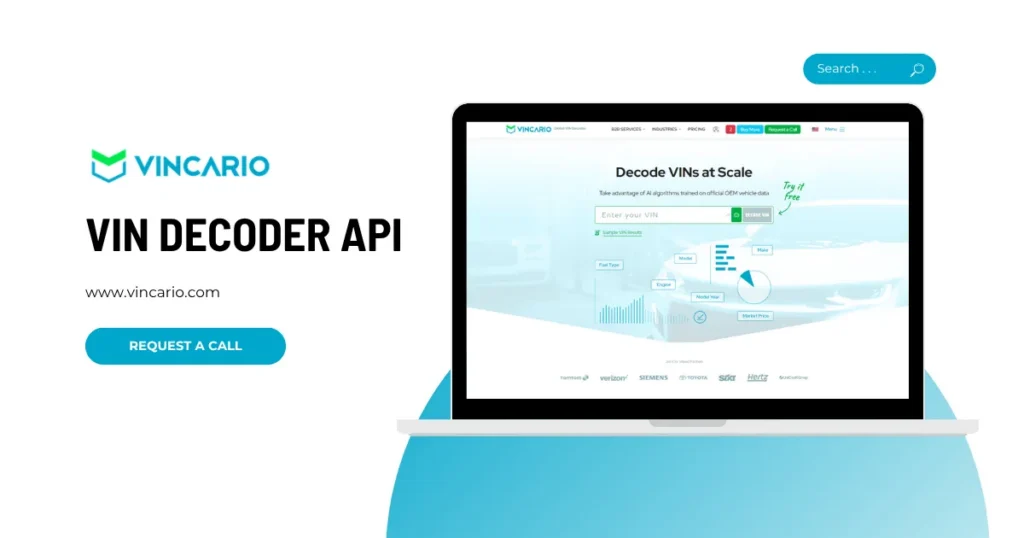
The Vincario VIN Decoder API is a professional vehicle data service that converts a VIN into detailed, structured information. It provides accurate specifications, exact trim and equipment, and additional insights such as pricing and history. Designed for business use, it offers global coverage, fast response times, and high data accuracy.
Best features
- Global VIN decoding across 110+ countries and thousands of brands
- Detailed vehicle data with 40–50+ attributes including engine, trim, fuel, transmission, and more
- High data accuracy powered by OEM and aggregated data sources (up to ~99.8%)
- Real-time vehicle market value with pricing and mileage insights
- Stolen vehicle check using police and proprietary databases
- Fast API performance with responses typically under 1 second
- Easy integration with REST API, SDKs, and tools like Postman, Zapier, and Make
- Automated workflows for fleet management, telematics, and marketplaces
- Scalable for business use with flexible pricing and enterprise support
- Structured JSON output for seamless use in apps, marketplaces, and systems
Cons
- Paid service, costs can add up with high API usage
- Advanced features cost extra, such as market value or history data
- 20 free VIN lookups for testing
- VIN decoding: $0.49 – $0.22 per request
- Vehicle market value: $1.99 – $0.90 per request
- OEM VIN lookup: Custom pricing
- Stolen vehicle check: $1.99 – $0.90 per request
Discounts are available for higher volumes. Try the Vincario API to get started.
Best for: Fleet management, mobility apps, telematics, insurance platforms, SaaS, and dealerships
2. NHTSA (vPIC API)
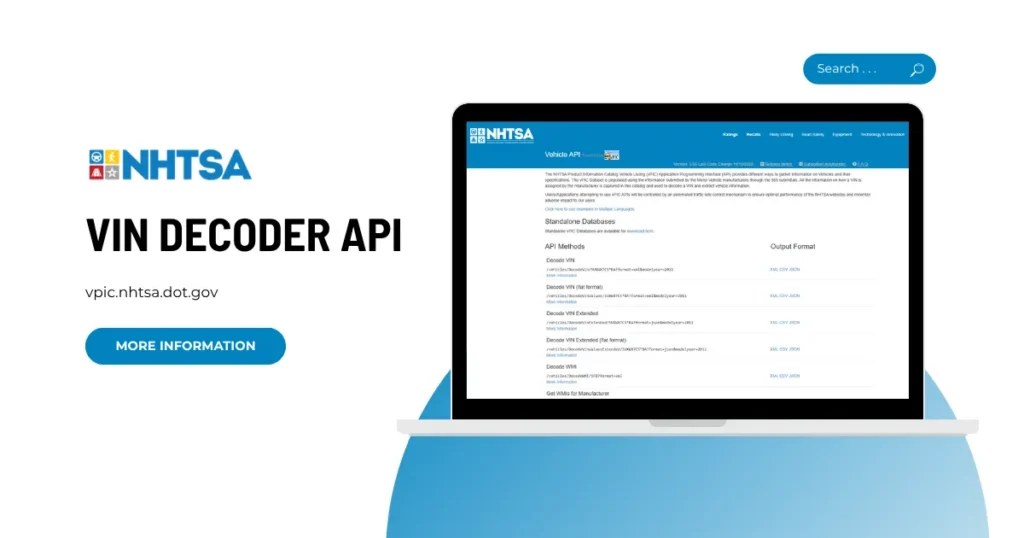
The National Highway Traffic Safety Administration (NHTSA) VIN Decoder API is a free, public service that decodes VINs into structured vehicle data. It provides manufacturer-submitted information such as make, model, engine, plant, and safety-related details. Designed for developers and basic applications, it offers reliable government-backed data, but with limited depth compared to commercial APIs.
Best features
- Free VIN decoding API with no usage fees
- Official government data sourced directly from manufacturers
- Core vehicle specifications including make, model, engine, plant, and body type
- Supports partial VIN decoding (with missing characters)
- Multiple output formats including JSON, XML, and CSV
- Simple REST API with easy integration
- No authentication required for most endpoints
- Reliable and stable service for basic decoding and compliance use
Cons
- US-only focus, no global coverage
- Basic data only, no trim or equipment details
- Limited depth, no pricing or history
- No enterprise support or SLA
API Pricing
- Free to use
- No enterprise features, SLA, or premium support available
Best for: Developers, basic applications
3. VinAudit
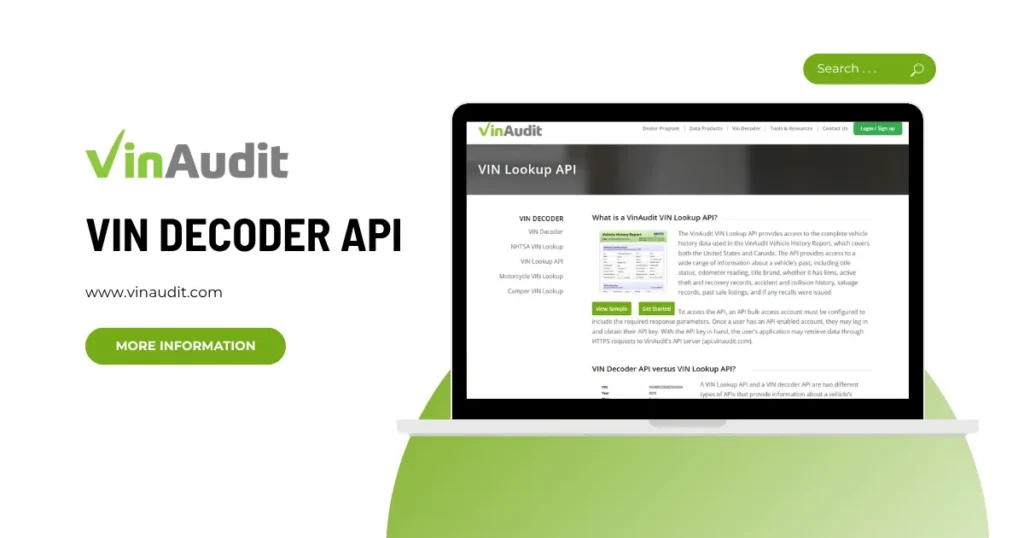
The VinAudit VIN Decoder API is a commercial vehicle data service focused on US market data, combining VIN decoding with vehicle history and title records. It provides detailed specifications along with access to NMVTIS-based data, including ownership, title status, and accident records.
Best features
- VIN decoding + vehicle history in one API
- Designed for US market with reliable data sources
- Access to NMVTIS data (title, salvage, theft, total loss)
- Core vehicle specs including make, model, year, engine, and trim
- Ownership and title records for compliance and risk checks
- Accident and damage data (where available)
- REST API with JSON output for easy integration
- Useful for reports, compliance, and fraud detection
Cons
- US-focused data only, no global coverage
- Limited technical depth compared to OEM-level providers
- Advanced data tied to paid reports
- Less suitable for real-time pricing or market analytics
API Pricing
- Pay-per-request model (credits-based)
- Pricing varies based on data type (VIN decode vs full history report)
- No free unlimited tier, but trial access may be available
Best for: Marketplaces, dealerships, insurance companies, compliance teams
4. MarketCheck
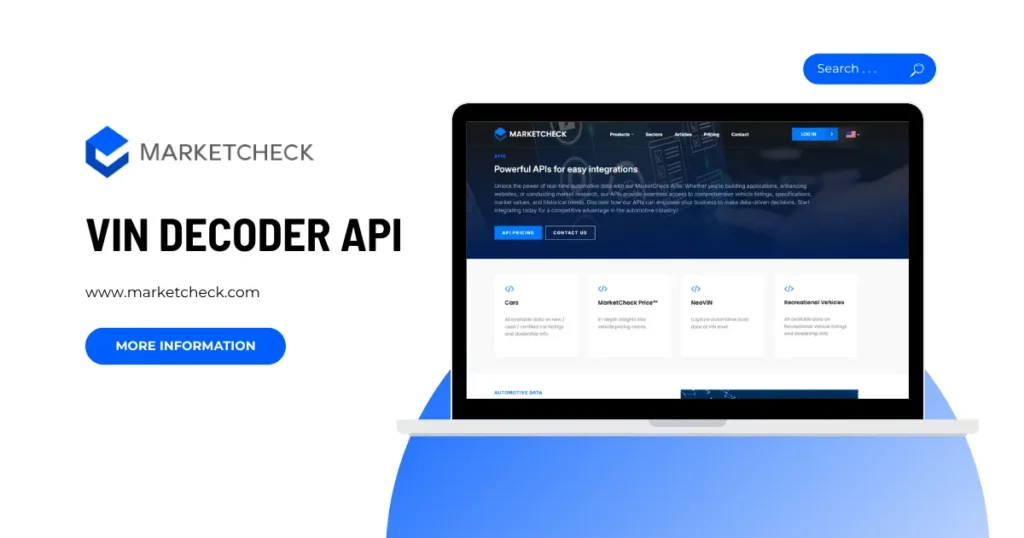
The MarketCheck VIN Decoder API is part of a broader automotive data platform focused on market intelligence, pricing, and inventory analytics. It combines VIN decoding with real-time market data, including listings, dealer inventory, and price trends. Designed for marketplaces, dealerships, and analytics platforms, it delivers both vehicle specifications and actionable market insights.
Best features
- Combines VIN decoding with market data
- Access to millions of vehicle listings across the US market
- Real-time pricing insights based on live inventory data
- Dealer and inventory data for market analysis
- Core vehicle specs including make, model, year, and trim
- Historical and current market trends for pricing strategies
- REST API with JSON output for easy integration
Cons
- US-focused data, limited global coverage
- Less detailed OEM-level specs compared to specialized providers
- Advanced insights require higher-tier plans
- Not focused on vehicle history or compliance data
API Pricing
- Free: 500 calls per month (without API)
- Basic: $299/month for 5,000 calls
- Standard: $749/month + usage-based calls
- Enterprise: Custom pricing with unlimited calls
- Additional fees: Recall check API $0.07, Title check API $0.49, Plate-to-VIN API $0.70
Best for: Dealerships, marketplaces, pricing tools, analytics platforms
5. DataOne Software
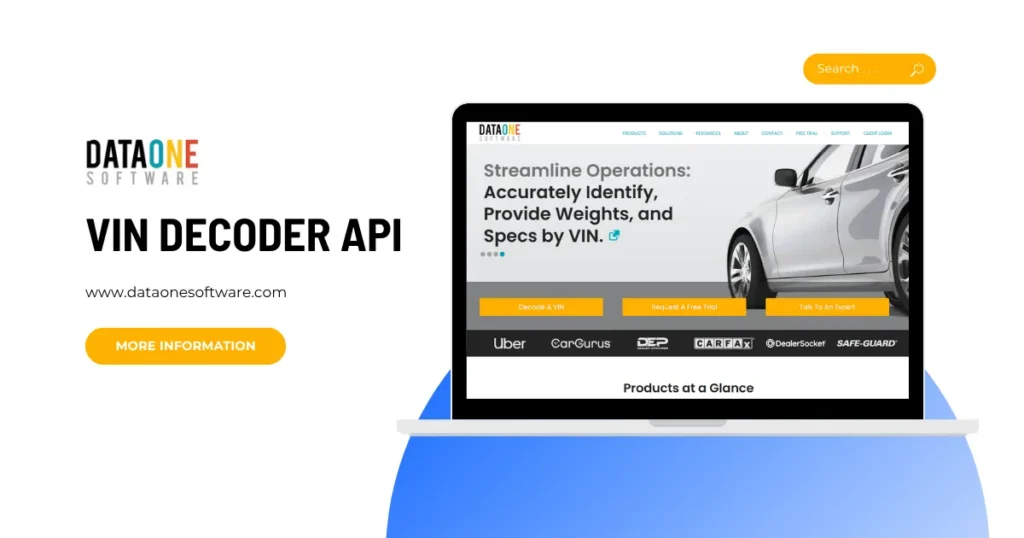
The DataOne Software VIN Decoder API is an enterprise-grade vehicle data solution focused on OEM-level accuracy. It provides highly detailed VIN decoding with exact trim, build data, and installed options.
Best features
- OEM-level VIN decoding with high precision
- Exact trim and build data including installed options and packages
- Standardized vehicle data for consistent use across systems
- Comprehensive specs including engine, drivetrain, dimensions, and features
- Data normalization for clean and structured output
- REST API with structured JSON output for integration
- High data quality sourced from manufacturers and industry datasets
Cons
- Primarily US-focused data
- Premium pricing, not suitable for small projects
- No vehicle history or market pricing data
- Integration can be more complex compared to simpler APIs
API Pricing
- Custom pricing only
- Based on usage, data scope, and business requirements
- Enterprise contracts and SLAs available
Best for: Enterprises, lenders, insurers, large automotive platforms
6. VehicleDatabases
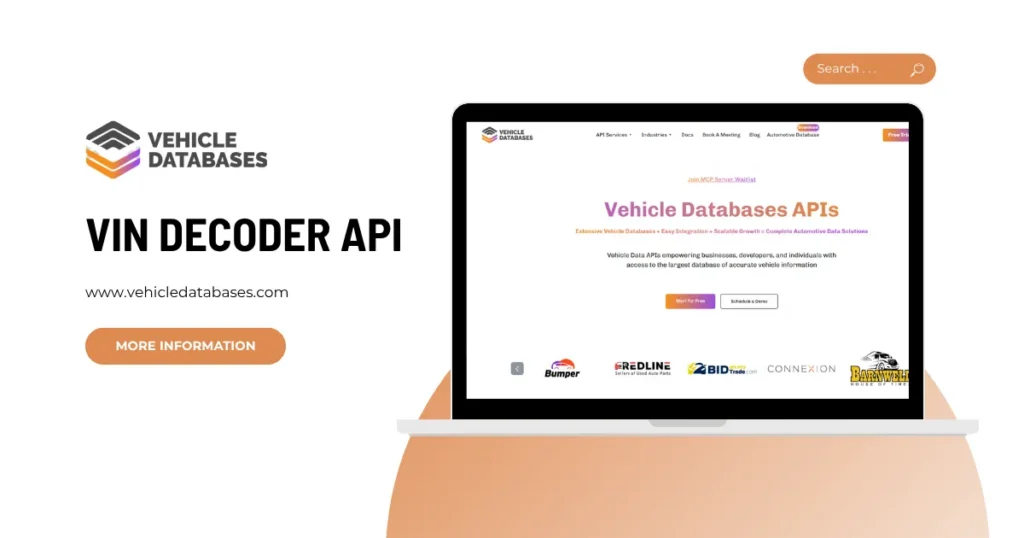
The VehicleDatabases VIN decoder API is a flexible vehicle data service designed for global applications. It provides detailed VIN decoding with a strong focus on structured data, broad coverage, and support for both modern and classic vehicles. Built for SaaS platforms, marketplaces, and developers, it delivers scalable vehicle data with consistent output and easy integration.
Best features
- Global VIN decoding including US and EU markets
- Supports classic and modern VINs (including pre-1981 vehicles)
- Rich vehicle data with 200+ attributes per VIN
- Detailed specs including engine, trim, dimensions, and features
- Consistent structured data for easy processing and integration
- REST API with JSON output
- Fast and scalable API for high-volume applications
- Well-documented API for developers and SaaS platforms
Cons
- No built-in market pricing insights
- Limited OEM-level precision compared to premium providers
- Advanced datasets may require higher-tier plans
- Some VIN services may return no data
API Pricing
- Free trial includes 15 credits
- Subscription-based pricing ranges from $100 to $2,500 ($0.20 to $0.05 per credit)
- Pay-as-you-go plans range from $125 to $5,000 ($0.25 to $0.10 per credit)
- Testing credit plans range from $100 to $2,500 (450 to 15,000 credits)
- Custom plans for higher volumes
- Yearly plans offer discounts
Best for: SaaS platforms, developers, global applications, marketplaces
7. Auto.dev

The Auto.dev VIN Decoder API is a developer-focused vehicle data service that combines VIN decoding with automotive market and listing data. It provides clean, structured vehicle information along with access to images, listings, and pricing insights. Designed for startups, apps, and fast integrations, it enables developers to quickly build automotive products with modern APIs.
Best features
- VIN decoding + vehicle listings in one API
- Access to vehicle images and listings from US market data
- Rich data coverage including specifications, recalls, total cost of ownership, payments, and OEM build data
- Core vehicle specs including make, model, year, and trim
- Pricing and market insights from aggregated listing data
- Clean, developer-friendly API with modern documentation
- Fast integration with REST API and JSON output
Cons
- Primarily US-focused data
- Less detailed technical specs compared to OEM-level APIs
- Limited vehicle history data
- Advanced features require paid plans
API Pricing
- Starter: Free with 1,000 API calls (credit card required)
- Growth: $299/month plus data usage fees
- Standard: $599/month plus data usage fees
Best for: Developers, startups, automotive apps, MVP projects
8. Rapid API
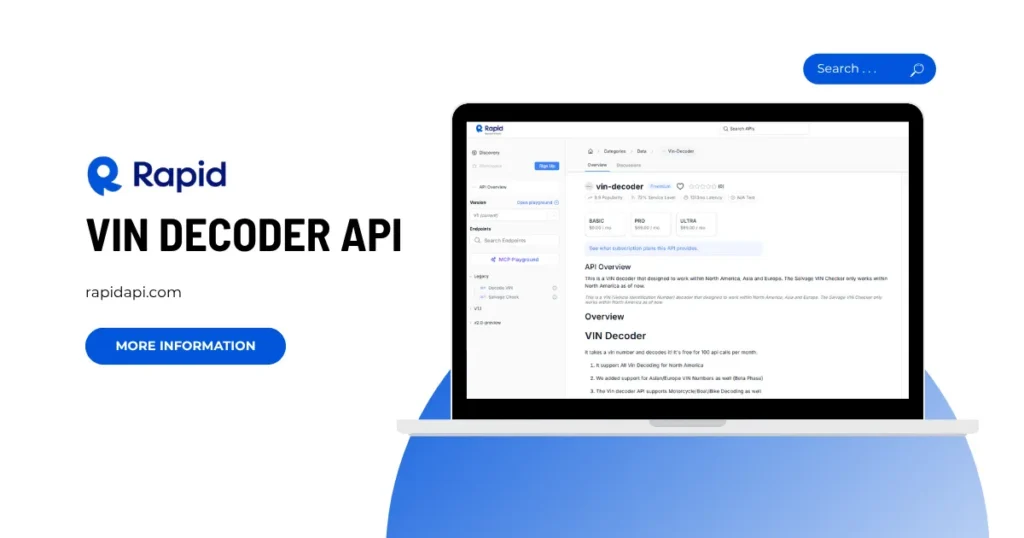
The RapidAPI VIN Decoder API (vinfreecheck) is a lightweight, developer-friendly VIN decoding service available through the RapidAPI platform. It provides basic vehicle data from a VIN, designed for quick integrations, testing, and simple applications. Ideal for developers who need fast access to VIN data without complex setup, it offers a convenient way to integrate VIN decoding via a single API marketplace.
Best features
- Simple VIN decoding API for quick lookups (primarily US market)
- Available via RapidAPI platform with easy subscription and key management
- Core vehicle data including make, model, year, and basic specs
- Fast integration with REST API and JSON responses
- Multi-language support through RapidAPI SDKs (Python, JS, PHP, etc.)
- Good for prototyping and testing
- No complex setup required
Cons
- Limited data depth, mostly basic vehicle information
- No advanced data like pricing, history, or market insights
- Not suitable for enterprise or large-scale applications
API Pricing
- Basic: Free plan (10 decodes, credit card required)
- Pro: $69/month (up to 3,000 VIN decodes)
- Ultra: $99/month (up to 20,000 VIN decodes)
- Additional: Bandwidth platform fee applies
Best for: Developers and small apps
9. Edmunds
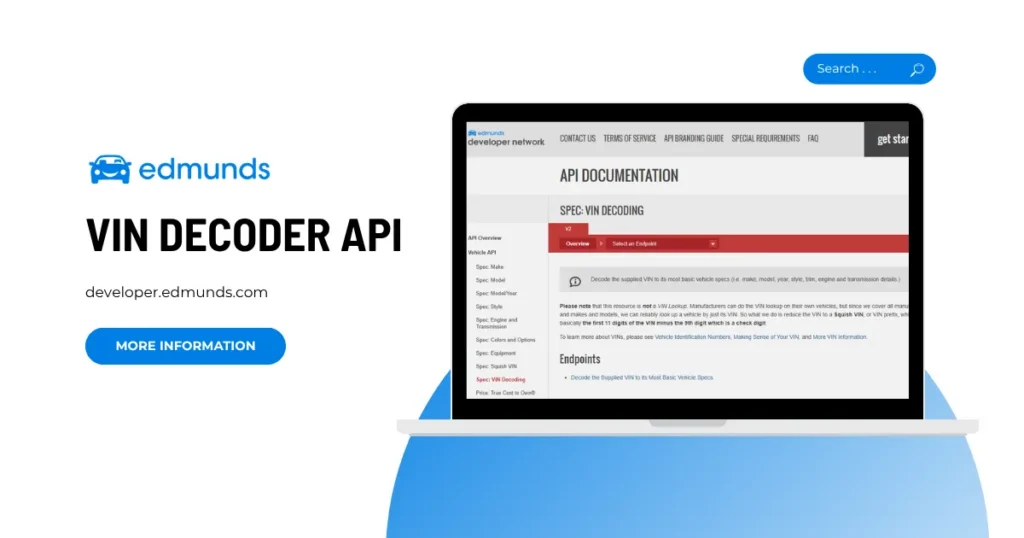
The Edmunds VIN Decoder API is a US-focused vehicle data service that provides detailed specifications based on VIN. It delivers accurate vehicle identification along with structured data such as trim, engine, transmission, and features. Designed for developers, marketplaces, and automotive platforms, it combines VIN decoding with Edmunds’ proprietary vehicle database.
Best features
- Accurate VIN decoding with detailed vehicle specifications
- Trim-level identification with engine, transmission, and drivetrain data
- Rich vehicle attributes including features, options, and configurations
- Structured JSON output for easy integration
- Reliable US market data from Edmunds database
- REST API with clear documentation Good fit for automotive apps and marketplaces
Cons
- US-focused data only
- Limited access (requires API key approval)
- No vehicle history or market pricing data
- Less flexible compared to newer API platforms
API Pricing
- Access via Edmunds developer program
- Pricing not publicly listed
- Approval required for API usage Usage limits may apply
Best for: Developers and automotive platforms
10. ClearVIN
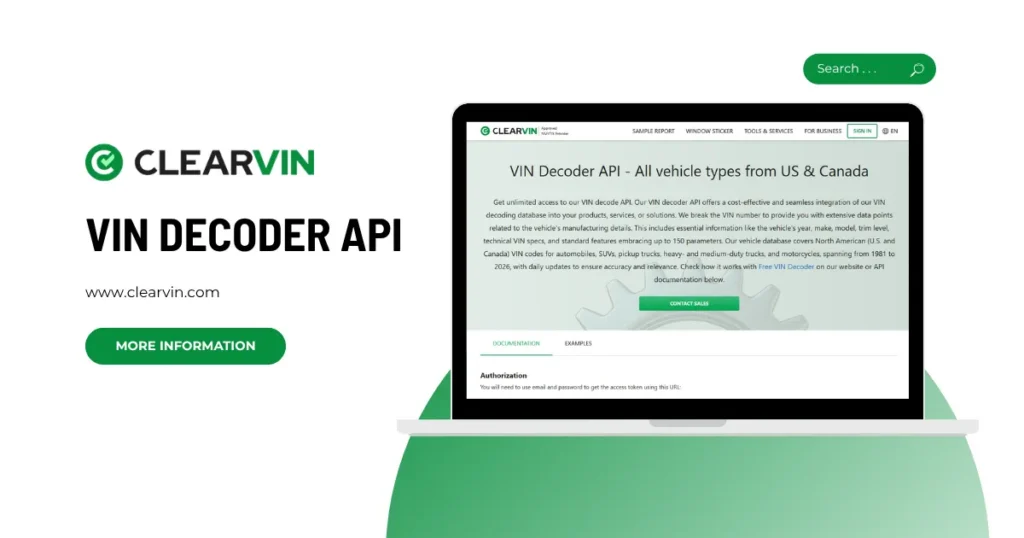
The ClearVIN VIN Decoder API is a US-focused vehicle data service that combines VIN decoding with comprehensive vehicle history and title data. As an approved NMVTIS provider, it delivers reliable government-backed information along with data from insurance companies, auctions, and industry sources.
Best features
- VIN decoding + full vehicle history in one API
- NMVTIS-approved provider with official government data
- Detailed vehicle specs including make, model, year, engine, and trim
- Accident, salvage, and total loss data from all US states
- Title history and ownership records with registration details
- Lien and loan records for financial risk checks
- Auction history with photos for deeper vehicle insights
- Multiple data sources including NADA, NVS, and proprietary datasets
- REST API with structured JSON output
- Useful for compliance, fraud detection, and reporting
Cons
- US-focused data only
- Advanced data tied to paid reports
- Less focus on real-time pricing or market analytics
- Not optimized for lightweight or basic use cases
API Pricing
- Pay-per-request model
- Pricing varies based on report type and data depth
- No public fixed pricing tiers
Best for: Dealerships, insurance companies, compliance, vehicle history reports
What data can I get from a VIN decoder API?
A VIN decoder API can return a wide range of vehicle data, depending on the provider and data sources.
- Basic identification: make, model, year, body type
- Technical specifications: engine, transmission, fuel type, drivetrain
- Detailed vehicle data: trim level, equipment, optional features, colors
- Manufacturing info: plant, country, production details
- Safety data: airbags, recalls, safety systems
- Commercial data: MSRP, market value, pricing insights
- Vehicle history (advanced): ownership, accidents, title records, mileage
The key difference is depth. Some APIs give you just the basics. Others give you a full vehicle profile you can use for pricing, risk assessment, and business decisions.

How accurate are VIN decoder APIs?
VIN decoder API accuracy varies by provider and data source. Basic, pattern-based APIs typically reach around 70–90% accuracy, while advanced APIs using OEM and aggregated data can achieve 95–99%+ accuracy with precise trim and equipment details.
For example, Vincario offers up to 99.8% data accuracy, ensuring reliable and detailed results.
How easy is it to integrate a VIN decoder API?
Most VIN decoder APIs are easy to integrate. They typically use REST endpoints, so you can send a VIN and get JSON data in seconds. Clear documentation, API keys, and ready-to-use examples make setup straightforward for most developers.
Integration time can range from minutes to a few hours, depending on your use case. The real difference is in documentation quality, SDK support, and how clean and consistent the data response is.
How much does a VIN decoder API cost?
VIN decoder API pricing varies widely depending on data depth and usage.
- Free APIs exist, but usually offer only basic data and limited usage
- Entry-level plans typically start at $15–$79/month
- Usage-based pricing can be fractions of a cent per request at scale
- Enterprise APIs (with full data, SLAs, support) can cost hundreds per month plus data fees
Final Words: Which VIN API Is Best?
The best VIN decoder API depends on your use case. Some tools are great for basic decoding. Others deliver full vehicle intelligence. Here are our expert picks for the best VIN decoder APIs.
| Recommended VIN APIs | Best For | Key Advantage |
| Vincario | Businesses, global platforms | High accuracy, rich data, global coverage |
| NHTSA | Free use, basic decoding | Reliable, no cost, easy access |
If you want a quick, free solution, NHTSA (National Highway Traffic Safety Administration) is a solid starting point. If you need accurate, scalable, business-ready data, Vincario stands out.
We hope this guide helps you find the right VIN API for your needs and turn every VIN into real value for your business.

FAQ – Frequently asked questions
Is there a free VIN decoder API available?
Yes, some VIN decoder APIs are free, but they usually offer limited data. You can also try Vincario with 20 free decodes.
In what format does the VIN API return data?
VIN APIs typically return data in JSON format, making it easy to integrate into applications and systems.
What programming languages can I use to integrate a VIN decoder API?
You can integrate a VIN API tool using multiple programming languages, including C#, VB.NET, JavaScript (with jQuery), PHP, Python, Ruby, and R. Most APIs are REST-based, so they work with virtually any language that supports HTTP requests.
Can the API decode partial VINs?
Yes. The API supports partial VIN decoding, allowing you to use incomplete VINs with placeholders for missing characters.
What does API stand for?
API stands for Application Programming Interface. It allows different software systems to communicate and exchange data.
Do VIN decoder APIs offer VIN scanning features?
Yes, some VIN decoder APIs also support VIN scanning using OCR (Optical Character Recognition). For example, Vincario offers an OCR VIN scanner that can read VINs directly from images or a camera, making data input faster and error-free.
Which industries use VIN decoder APIs?
VIN decoder APIs are used across multiple industries that rely on accurate vehicle data:
- Automotive marketplaces – for listing creation, pricing, and inventory management
- Dealerships – for vehicle identification, stock management, and sales
- Insurance companies – for risk assessment, underwriting, and claims processing
- Fleet management – for tracking, maintenance, and asset management
- Automotive SaaS platforms – for building apps and data-driven tools
- Leasing and financing companies – for valuation and loan decisions
- Auto repair and parts businesses – for identifying correct parts and compatibility
- Government and compliance agencies – for registration, safety, and regulatory checks